
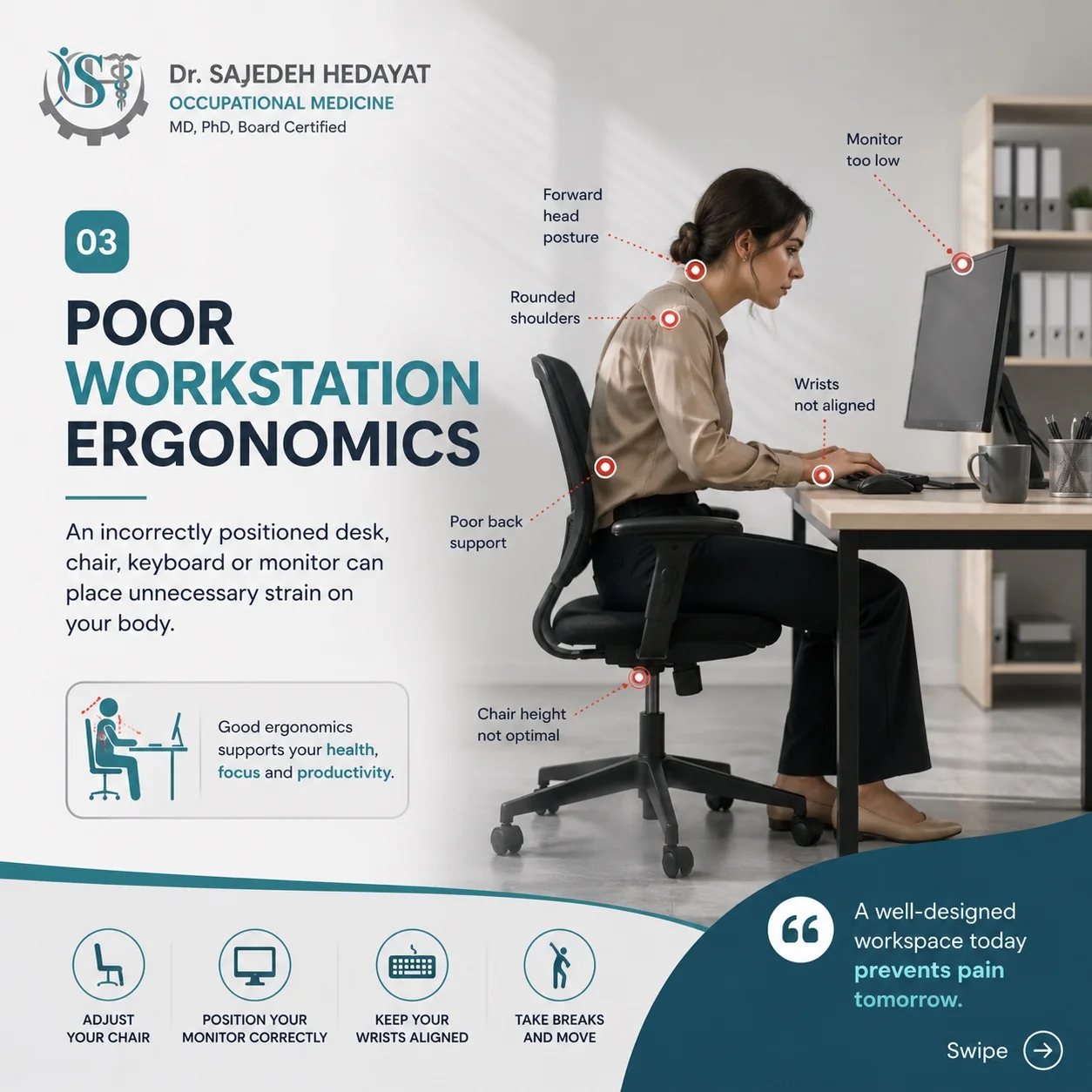
Office work has occupational risks
A workplace does not need heavy machinery to create work-related health problems. Office workers may experience prolonged sitting, repetitive tasks, awkward postures, poor workstation fit, visual demands and work-related stress.
Ergonomics is about fitting work to people
NIOSH defines ergonomics as designing work tasks and job demands to fit workers' capabilities. Relevant risk factors include awkward posture, repetition, sustained activity, force and vibration.
Look beyond the individual complaint
When several workers in the same area report similar neck, shoulder, back or upper-limb symptoms, the workstation, equipment, task design and work organization should be reviewed.
Small changes can be meaningful
Appropriate chair and monitor positioning, work organization, breaks and task variation may reduce unnecessary strain. The best intervention depends on the actual workstation and work pattern.
References
- NIOSH Office Environments and Your Safety
- NIOSH Ergonomics and Work-Related Musculoskeletal Disorders
These references support the occupational medicine principles discussed above. Individual assessment and legal requirements may vary by job, exposure and jurisdiction.