
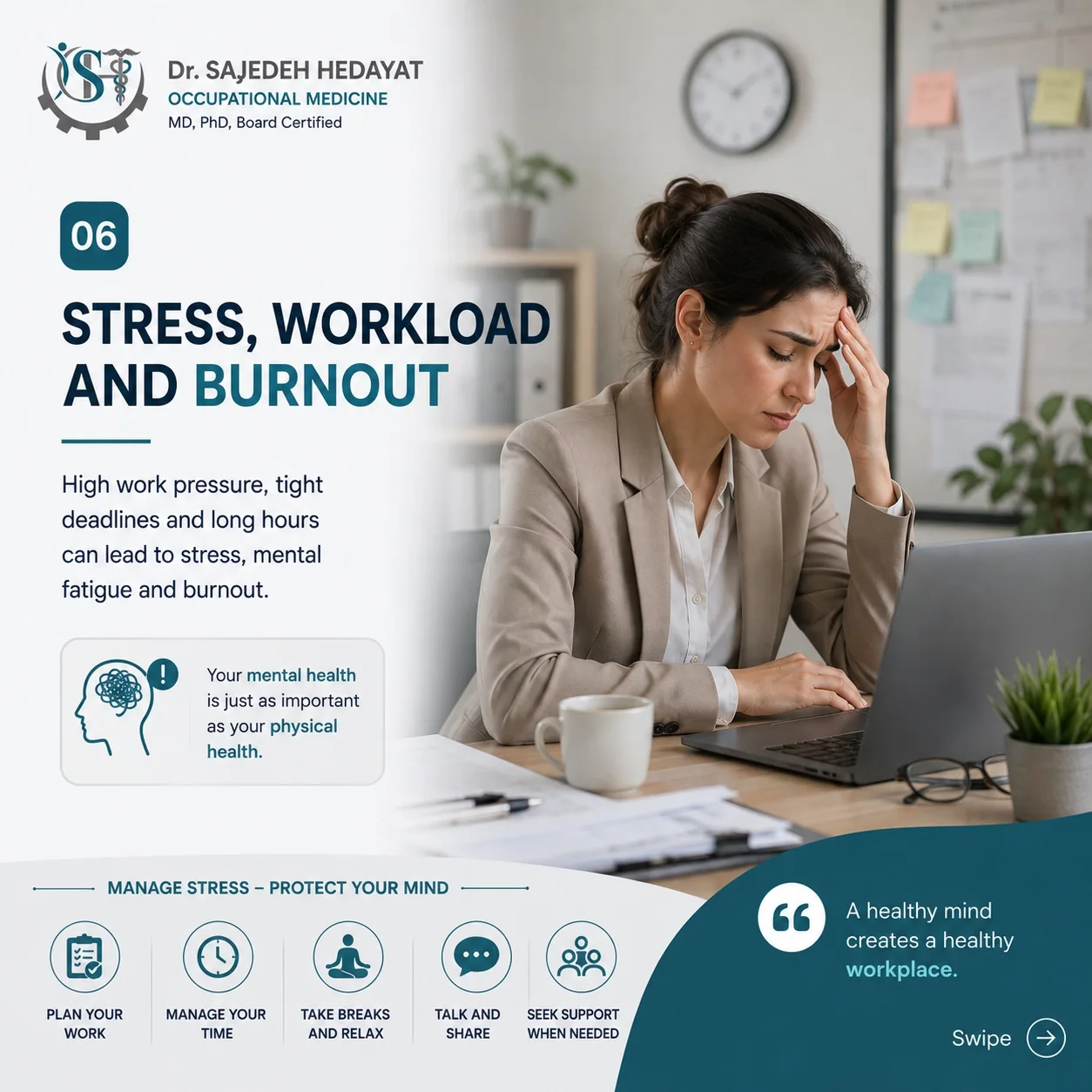
Fatigue is more than feeling tired
Work-related fatigue can arise from night work, extended hours, insufficient recovery, physically or mentally demanding tasks, stress and hot environments.
Safety can be affected
NIOSH notes that fatigue can slow reaction time, reduce attention, limit short-term memory and impair judgment. These effects are particularly relevant in safety-sensitive work.
Look at the system as well as the worker
A useful assessment should consider shift design, rest opportunities, workload, commuting demands and other contributors. Treating fatigue only as an individual problem can miss important organizational causes.
Management requires shared responsibility
Employers and workers both have roles in identifying and reducing fatigue risk. The appropriate response depends on the work pattern and the consequences of impaired alertness in that job.
References
These references support the occupational medicine principles discussed above. Individual assessment and legal requirements may vary by job, exposure and jurisdiction.