A diagnosis alone is not enough
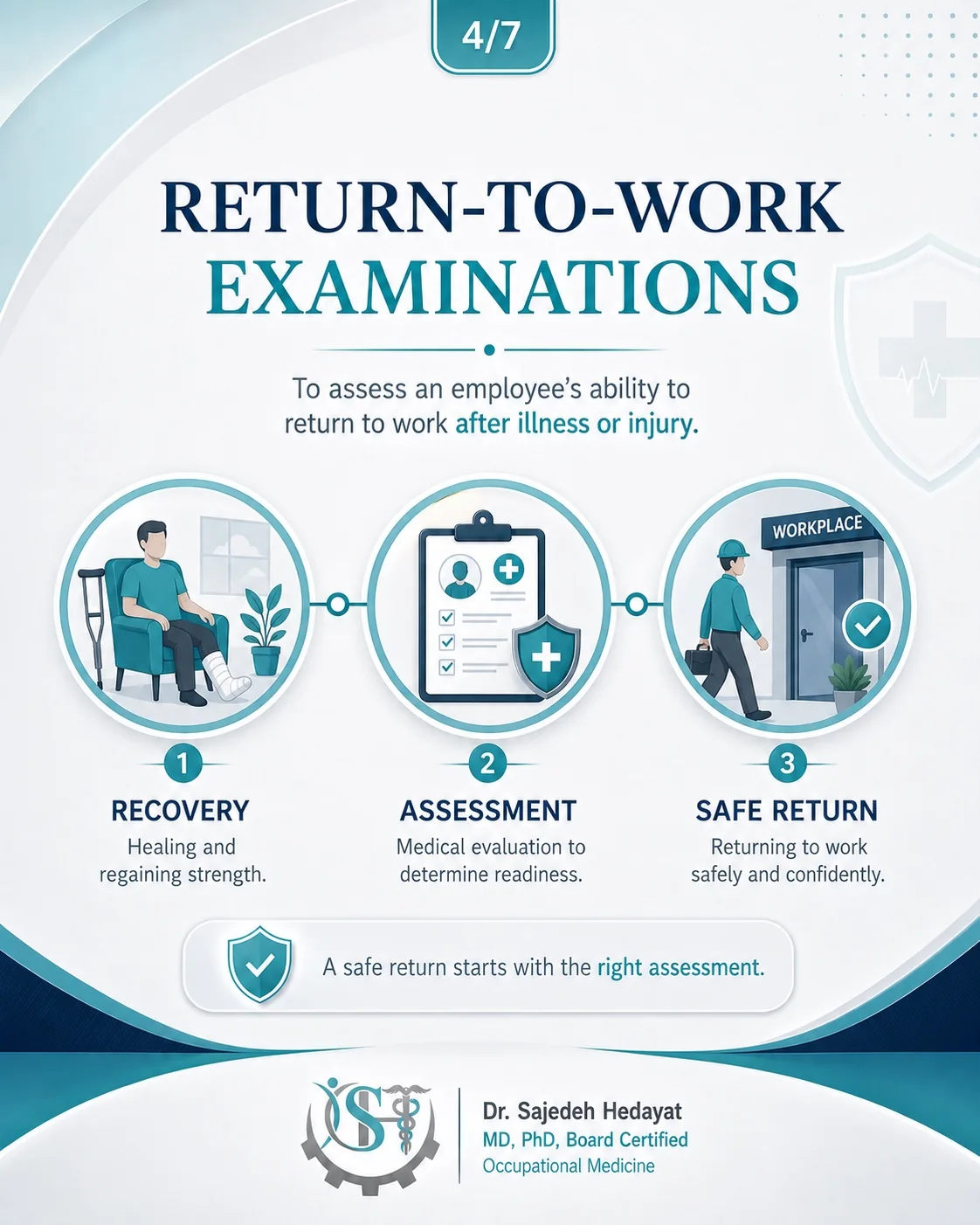
Two people with the same diagnosis may have very different jobs and different recovery needs. A return-to-work assessment therefore looks at current function in relation to the actual tasks that must be performed.
The job matters
Physical demands, cognitive demands, driving, work at height, shift patterns, exposure and safety-sensitive responsibilities may all change the meaning of a medical restriction.
Return can be graded
Depending on the situation, a worker may return fully, require temporary restrictions, modified duties or a gradual increase in activity. NIOSH guidance on worker recovery recognizes modified jobs, restricted duties and temporary transfers as possible components of return-to-work programs.
The aim is a safe and sustainable return
The medical opinion should be clear enough to guide the workplace without disclosing unnecessary clinical information. Follow-up may be needed when function is expected to change.
References
These references support the occupational medicine principles discussed above. Individual assessment and legal requirements may vary by job, exposure and jurisdiction.