
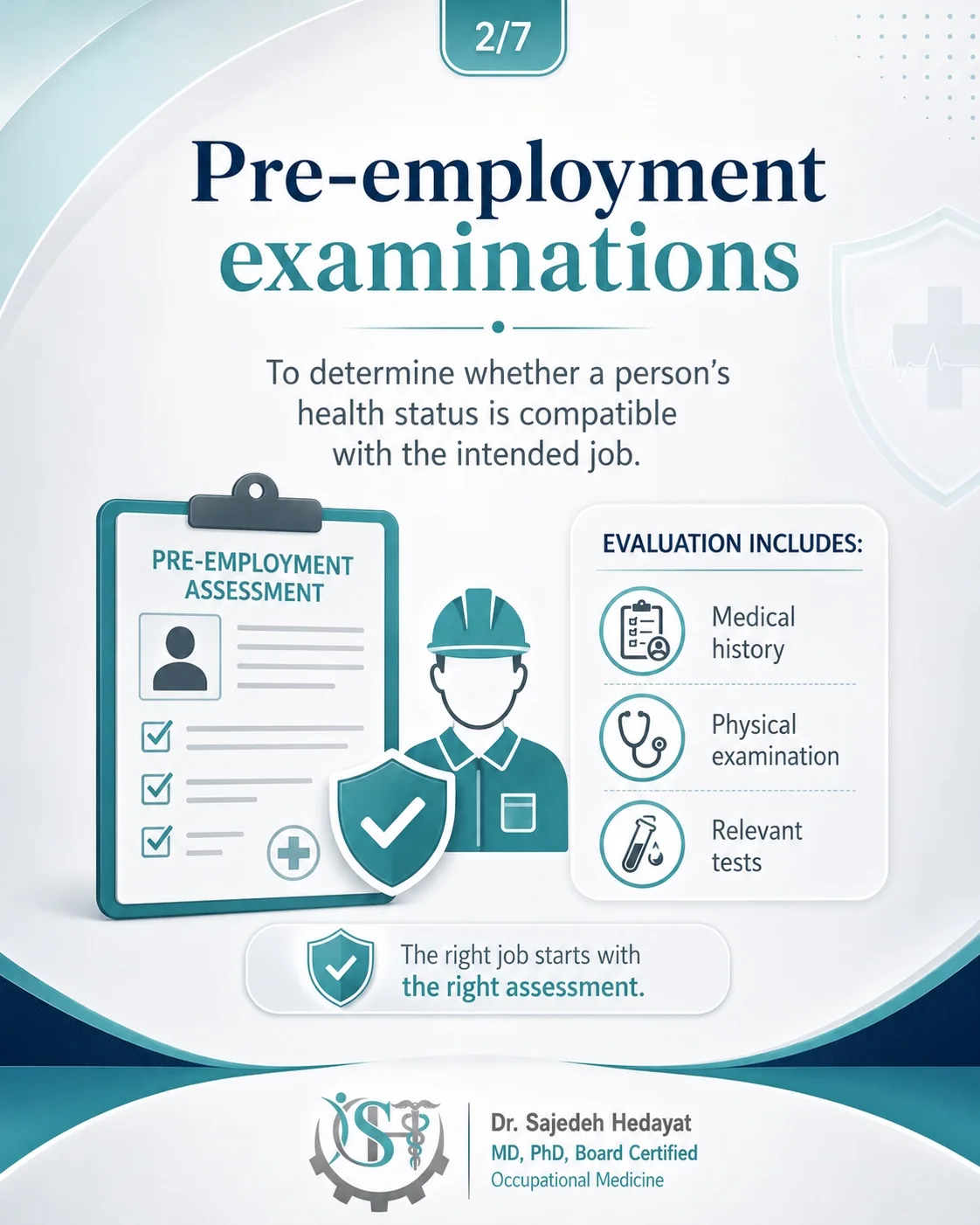
The purpose is work-related fitness, not a generic check-up
A pre-employment medical examination should answer a defined occupational question: whether the worker can perform the intended job safely, and whether any health consideration requires further assessment, adjustment or monitoring.
Different jobs create different questions
An office employee, driver, welder and laboratory worker do not share the same functional demands or exposure profile. The examination should therefore be based on the job description, safety-sensitive duties and relevant hazards.
Testing should have a reason
Clinical tests are useful when they address a relevant risk or functional requirement. A test should not be added simply because it is available. ILO guidance supports occupational health programs that are adapted to the specific risks of the undertaking.
A proportionate conclusion
The final opinion should focus on fitness and practical work recommendations. It should avoid unnecessary disclosure of confidential medical detail to the employer.
References
These references support the occupational medicine principles discussed above. Individual assessment and legal requirements may vary by job, exposure and jurisdiction.