
Surveillance should be risk-based
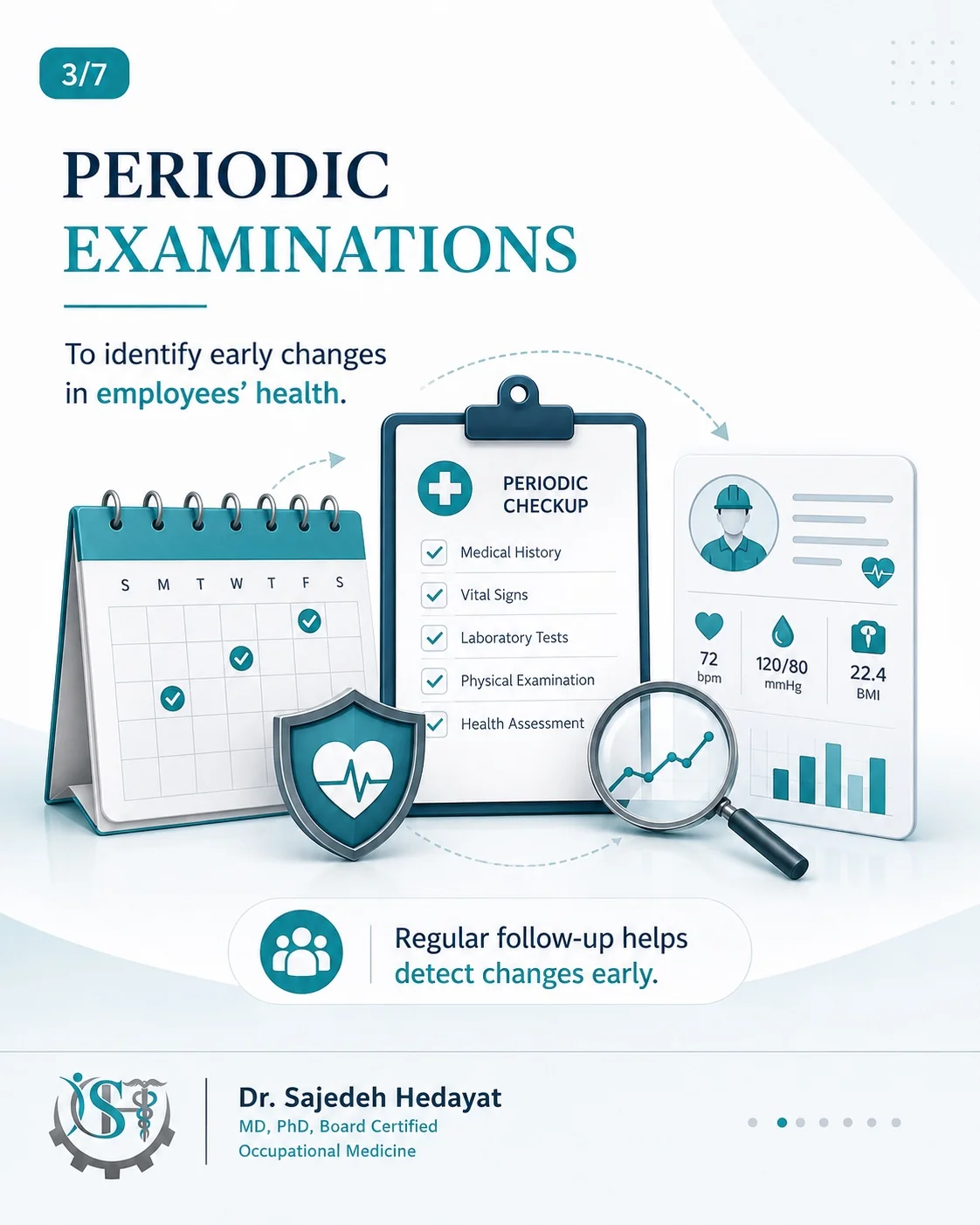
Periodic Occupational Medicine examinations are not simply an annual repetition of the same medical package. Their value depends on the worker's exposure profile, job demands, previous results and the purpose of surveillance.
Look for change over time
Repeated measurements can help identify meaningful trends. Examples include changes in hearing thresholds in noise-exposed workers or changes in respiratory function where inhalation hazards are relevant.
Findings should lead to action
Surveillance is most useful when abnormal or changing results trigger appropriate clinical follow-up and, when indicated, a review of workplace exposure and controls. NIOSH describes surveillance as a tool for identifying high-risk groups and evaluating prevention efforts.
Do not separate the worker from the workplace
A medical finding may be important at the individual level, but groups of similar findings can also raise a workplace question. Occupational Medicine should connect those two levels carefully and confidentially.
References
These references support the occupational medicine principles discussed above. Individual assessment and legal requirements may vary by job, exposure and jurisdiction.